June 24-25     West Lafayette, IN

MMLS 2026

Midwest Machine Learning Symposium

Machine Learning Research in the Midwest
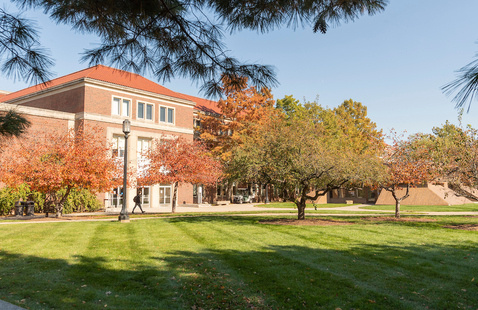


Purdue Memorial Union       [Image Credit]
About the Event

The Midwest ML Symposium aims to convene regional machine learning researchers for stimulating discussions and debates, to foster cross-institutional collaboration, and to showcase the collective talent of ML researchers at all career stages. [past events]

When: June 24-25, 2026

Where: Stewart Center, Purdue [Google Map]

  • Directions, transportation, and parking near the Stewart Center: here
  • General visitor parking at Purdue: here
  • Accommodations on or near campus: here
  • Purdue sun through trees       [Image Credit]
    Sponsor Opportunities

    The Midwest ML Symposium invites sponsors to have opportunities for exposure and connection with our community. In addition to supporting the regional Machine Learning community, you will be gratefully recognized in various media and materials, and have the opportunity to closely engage with symposium participants.

    Information: Learn about various sponsorship levels, benefits, and opportunities here! (Coming soon) Sponsors are encouraged to contact the Midwest ML Symposium local organizing committee. To discuss special requirements and to ask general questions regarding sponsorship of the Symposium, please contact at TBD.

    Boilermaker Special       [Image Credit]
    2026 Organizers

    Ruqi Zhang (Co-chair, Purdue) | Haohan Wang (Co-chair, UIUC) | Raymond A. Yeh (Purdue) | David Gleich (Purdue) | David Inouye (Purdue) | Vinayak Rao (Purdue) | Benjamin J. Lengerich (UW Madison) | Bryon Aragam (UChicago) | Cong Ma (UMich) | Xueru Zhang (OSU) | Qiqi Xie (UIUC)

    Advisory Board

    Rob Nowak (Chair, UW Madison) | Maxim Raginsky (UIUC) | Laura Balzano (UMich) | Avrim Blum (TTIC) | Rebecca Willett (UChicago) | Nati Srebro (TTIC) | Po-Ling Loh (Cambridge) | Matus Telgarsky (NYU) | Mike Franklin (UChicago)


    Plenary Speakers


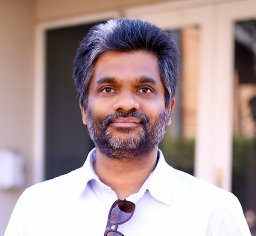
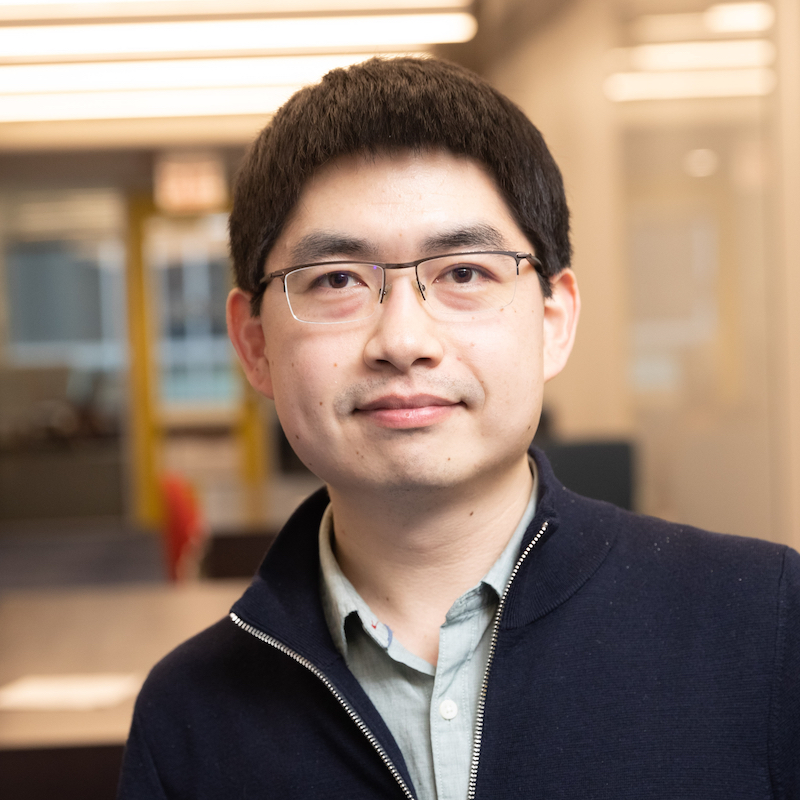
    Tong Zhang
    Tong Zhang

    Professor of Computer Science

    University of Illinois Urbana-Champaign

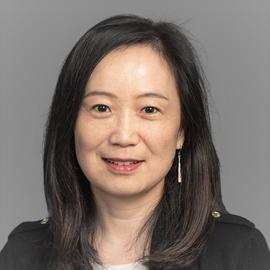
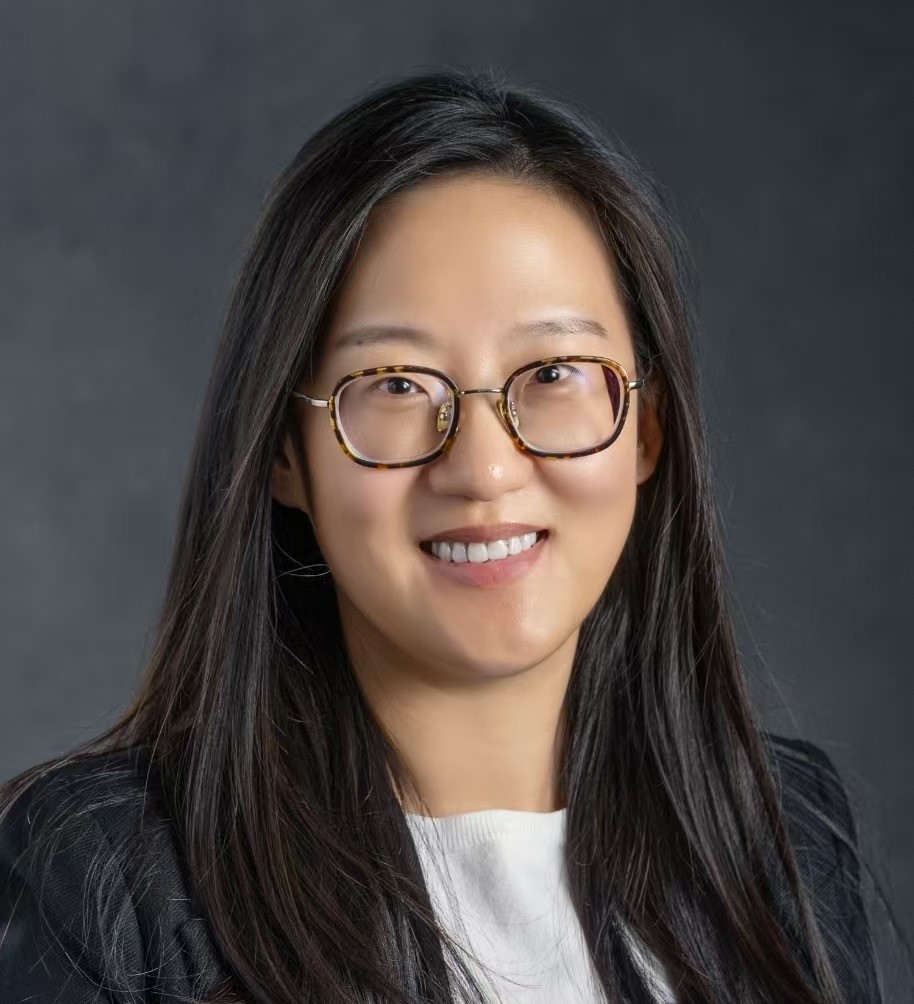
    Jennifer Neville
    Jennifer Neville

    Professor of Computer Science

    Purdue University

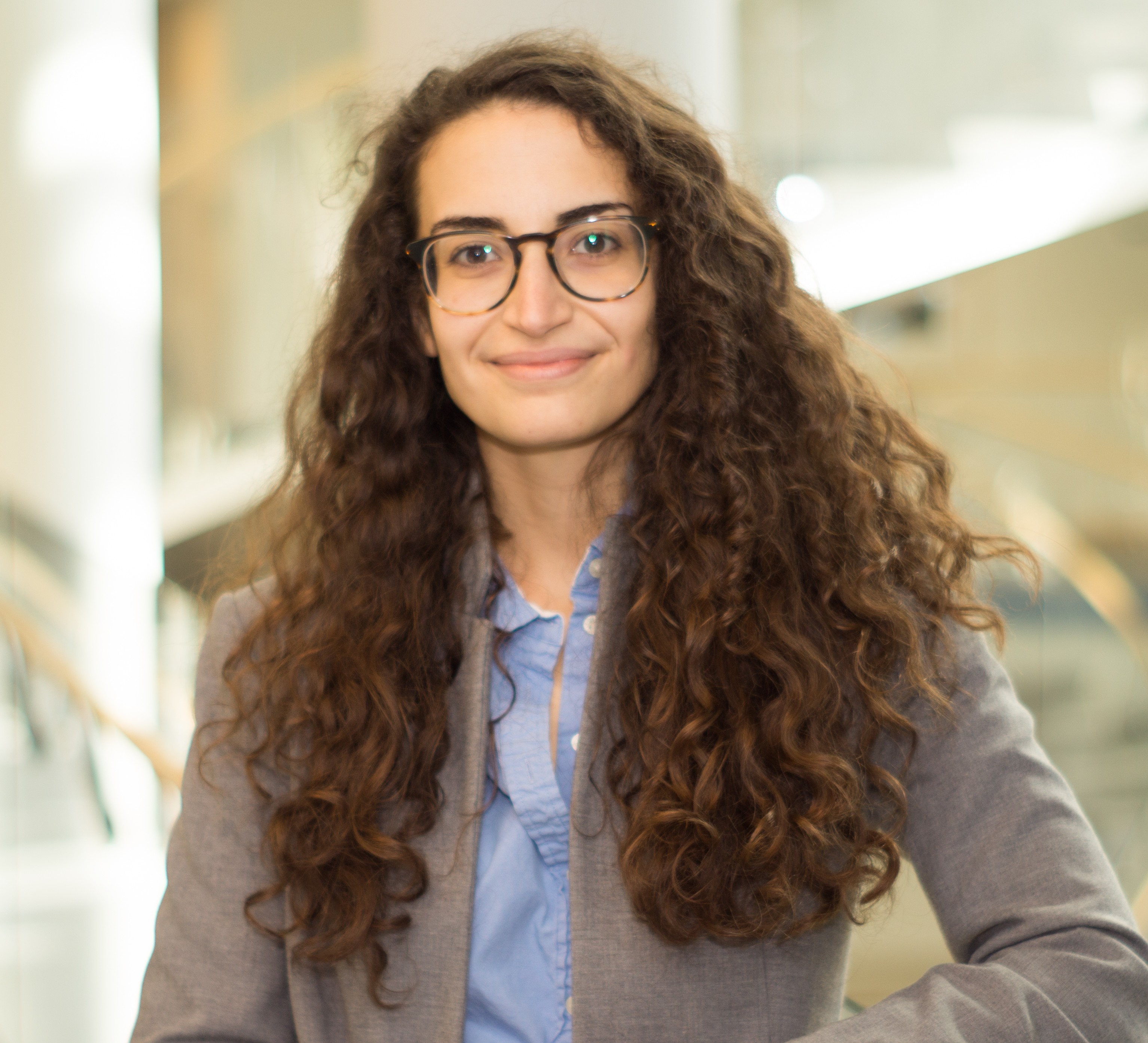
    Mohit Bansal
    Mohit Bansal

    Parker Distinguished Professor

    University of North Carolina at Chapel Hill

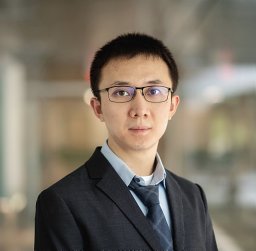
    Joyce Y. Chai
    Joyce Y. Chai

    Professor of Computer Science and Engineering

    University of Michigan

    Invited Speakers


    Maggie Makar
    Maggie Makar

    University of Michigan

    Grigorios Chrysos
    Grigorios Chrysos

    University of Wisconsin-Madison

    Kate Donahue
    Kate Donahue

    University of Illinois Urbana-Champaign

    Qing Qu
    Qing Qu

    University of Michigan

    Yuxin Chen
    Yuxin Chen

    University of Chicago

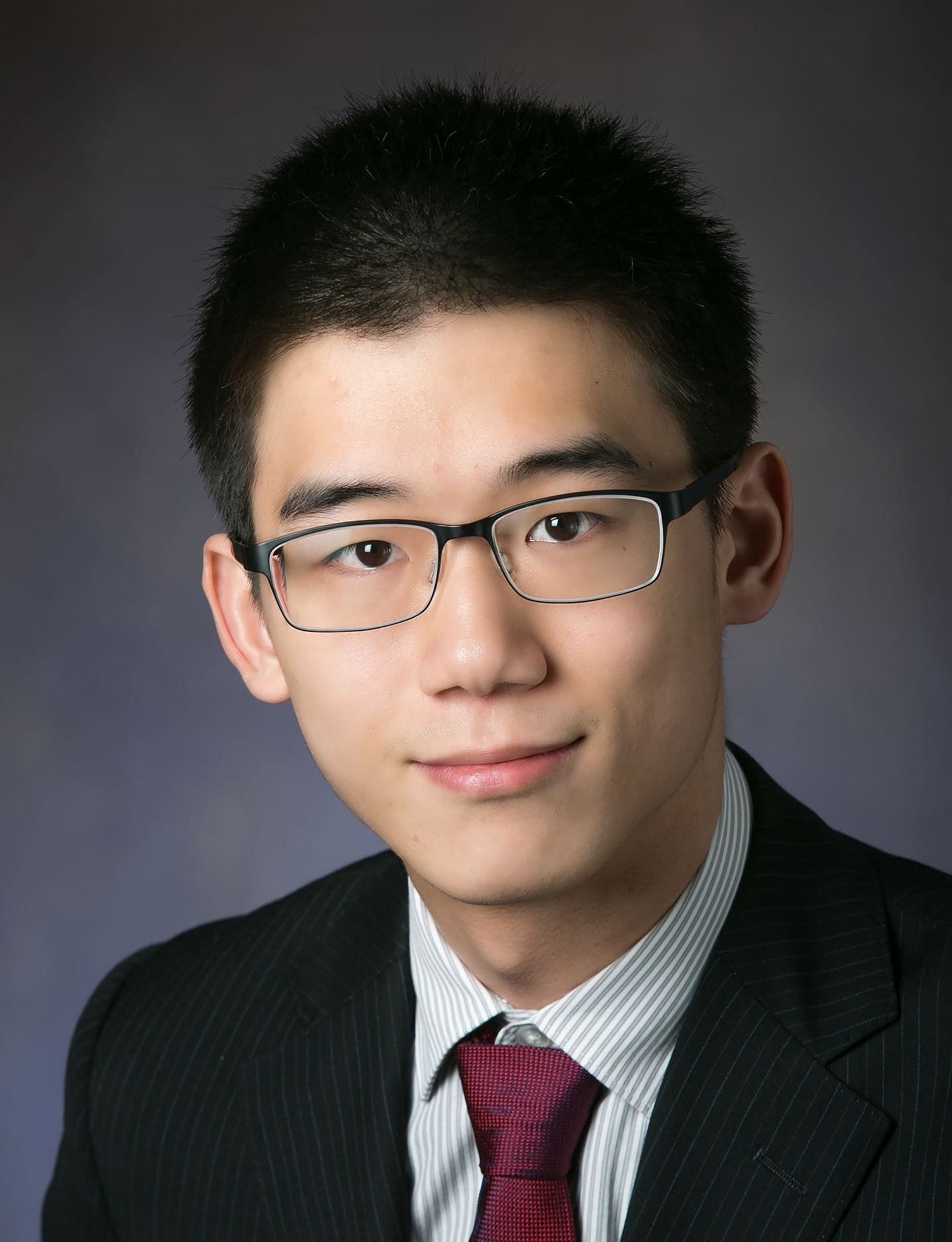
    Zijun Cui
    Zijun Cui

    Michigan State University

    Diego Gómez-Zará
    Diego Gómez-Zará

    University of Notre Dame

    Zhihui Zhu
    Zhihui Zhu

    Ohio State University

    Qianwen Wang
    Qianwen Wang

    University of Minnesota

    Sachin Kumar
    Sachin Kumar

    Ohio State University

    Raymond A. Yeh
    Raymond A. Yeh

    Purdue University

    Mahsa Ghasemi
    Mahsa Ghasemi

    Purdue University

    Schedule

    Locations:   Talks: Fowler Hall  •  Poster Sessions: STEW 214  •  Check-in & Meals: STEW 206

    View Full Program (PDF)
    Topic: Pushing the Behavioral Frontier of AI

    Abstract: Modern AI systems achieve impressive performance on benchmarks composed of isolated, fully specified tasks. Real-world knowledge work, however, is rarely so clean. Users communicate goals through evolving conversations, leave important details implicit, revisit prior decisions, and combine tasks of varying complexity into long-horizon workflows. As complexity accumulates through under-specification, changing intent, long-range dependencies, and iterative transformations of content, AI systems can exhibit subtle failures that are difficult for both users and developers to anticipate, diagnose, and correct. In this talk, I will discuss recent efforts to move beyond traditional benchmarks and study AI behavior in realistic knowledge-work settings. Drawing on work spanning complex reasoning tasks, multi-turn conversations, and long-horizon workflows, I will present empirical and theoretical results that reveal recurring failure modes as complexity increases. Together, these findings provide a foundation for understanding how and why AI behavior changes in realistic settings, and for developing evaluation paradigms that better reflect the challenges of real-world knowledge work.

    • Yuwei Cheng (University of Chicago) – Fine-Tuning Improves Information Conveyance in Language Models
    • Kai Cheng (Purdue University) – When World Models Mislead: The Mirage of Test-Time Scaling for VLM Spatial Reasoning
    • Wei-Ting (Jonathan) Tang (University of Wisconsin-Madison) – NeST-BO: Fast Local Bayesian Optimization via Newton-Step Targeting of Gradient and Hessian Information
    • Wenxi Chen (Purdue University) – Modular Safety Guardrails Are Necessary for Foundation-Model-Enabled Robots in the Real World
    • Yichen Gao (The Ohio State University) – An Illusion of Unlearning? Assessing Machine Unlearning Through Internal Representations

    Kate Donahue (University of Illinois Urbana-Champaign) – One AI, two AI, red AI, blue AI: Impacts of Aggregation on Model Diversity and Consumer Utility

    Diego Gómez-Zará (University of Notre Dame) – Collaborating with AI Beyond the Screen: Human-AI Interaction in Mixed Reality

    Qianwen Wang (University of Minnesota) – TBD

    Topic: Language Guided Learning in Situated and Embodied Agents

    Abstract: Language plays a central role in human learning and knowledge acquisition. With the emergence of large language models (LLMs), we are entering a new era in which language is increasingly used to guide task learning and reasoning in both humans and machines. In this talk, I will present some recent works from my lab that integrate foundation models for perceptual task guidance, failure recovery, and long-horizon planning. I will highlight the critical role of language use and language feedback and discuss key challenges and opportunities in enabling situated and embodied AI agents that can perceive, act, and collaborate with humans in the physical world.

    Maggie Makar (University of Michigan) – Causality: A Tool for Efficiency and Robustness in Learning Problems

    Mahsa Ghasemi (Purdue University) – Leveraging Structured Knowledge in Online Learning Through Causal Bandits

    Yuxin Chen (University of Chicago) – Direct Regret Optimization in Bayesian Optimization

    Topic: Trustworthy Planning Agents for Multimodal Collaborative Reasoning and Skill Learning

    Abstract: TBD

    • Zihan Wang (Northwestern University) – BAGEN: Are LLM Agents Budget-Aware?
    • Elvin Tseng (University of Michigan) – Linearly Constrained Symmetric Rank-One Approximation for Pre-Image Recovery in Nonlinear Matrix Completion
    • Harshavardhan Adepu (University of Wisconsin-Madison) – Fine-Tuning of Transformer models with Frames
    • Wei Cao (UIUC) – FreeOrbit4D: Training-Free Arbitrary Camera Redirection for Monocular Videos via Foreground-Complete 4D Reconstruction
    • Tanushree Nepal (University of Central Missouri) – What Hurts Retrieval-Augmented Generation in Biomedical Question Answering: A Stress-Test Study of Noise, Conflict and Unanswerability

    Grigorios Chrysos (University of Wisconsin-Madison) – Anatomy of a Hallucination: How Diffusion Solvers Shape Generation Errors

    Sachin Kumar (Ohio State University) – TBD

    Qing Qu (University of Michigan) – The Emergence of Generalizability and Semantic Low-Dim Subspaces in Diffusion Models

    Topic: Statistical Principles for Reinforcement Learning in LLM Reasoning

    Abstract: Reinforcement learning has become a central tool for post-training large language models on reasoning tasks, especially when rewards are verifiable through mathematics, coding, or other automatic checkers. In this talk, I will revisit RL for LLM reasoning through three connected lenses: theory, optimization, and sample efficiency. First, I will explain why KL regularization gives a statistically sound objective for this setting, including sharp sample-complexity guarantees for KL-regularized contextual bandits and preference learning under reference-policy coverage. This theory also clarifies the generalization role of KL regularization: it controls policy drift, limits reward hacking, and keeps learning within regions where the reward or preference signal remains reliable. Second, I will turn to optimization procedures for verifier-reward RL. I will start with Future-KL, a direct implementation of KL regularization for autoregressive policies, where token-level regularization induces a future credit-assignment term that common local KL penalties miss. I will then cover related methods, including GRPO-style updates and filtering-based variants such as RAFT and RAFT++. Third, I will discuss sample efficiency for sparse-reward RL. In verifier-based post-training, policy updates are estimated from noisy Monte Carlo rollouts with weak or vanishing signal on many prompts, so uniform sampling can waste rollouts on easy prompts while failing to allocate enough samples to prompts where additional rollouts are most informative. This motivates sampling-aware variants of standard RL estimators, such as variance reduction (GVM) and adaptive sampling (Reinforce-Ada). These results demonstrate that the right statistical principles for generalization, optimization, and sampling can make RL for reasoning language models simpler, more stable, and more compute-efficient.

    Zijun Cui (Michigan State University) – Euler–Lagrange Dynamics in Deep Models of Human Motion

    Zhihui Zhu (Ohio State University) – TBD

    Raymond A. Yeh (Purdue University) – TBD

    Registration


    Registration
    (Deadline June 14)
    Housing Application
    (Deadline June 5)
    Travel Award Application
    (Deadline June 5)

    Call for Posters


    Deadline for poster applications: May 31
    Notification of accepted posters on or before: June 3

    All topics related to machine learning are welcome, and posters can feature published or unpublished work. As part of the selection process, a small number of submitters will be invited to give 5-minute lightning talks at MMLS26. All submissions with an undergraduate or graduate student as first author are automatically considered for lightning talks and are also eligible for our Student Poster Awards.

    Students and postdocs will also be eligible for travel awards. Stay tuned for more details!

    Please note that accepted presenters are responsible for printing their own posters. We look forward to your submissions!

    Submit Your Poster Application

    Sponsors


    Platinum Sponsors


    Gold Sponsors


    Silver Sponsors


    Bronze Sponsors


    Meal/Break Sponsors


    Media Partners